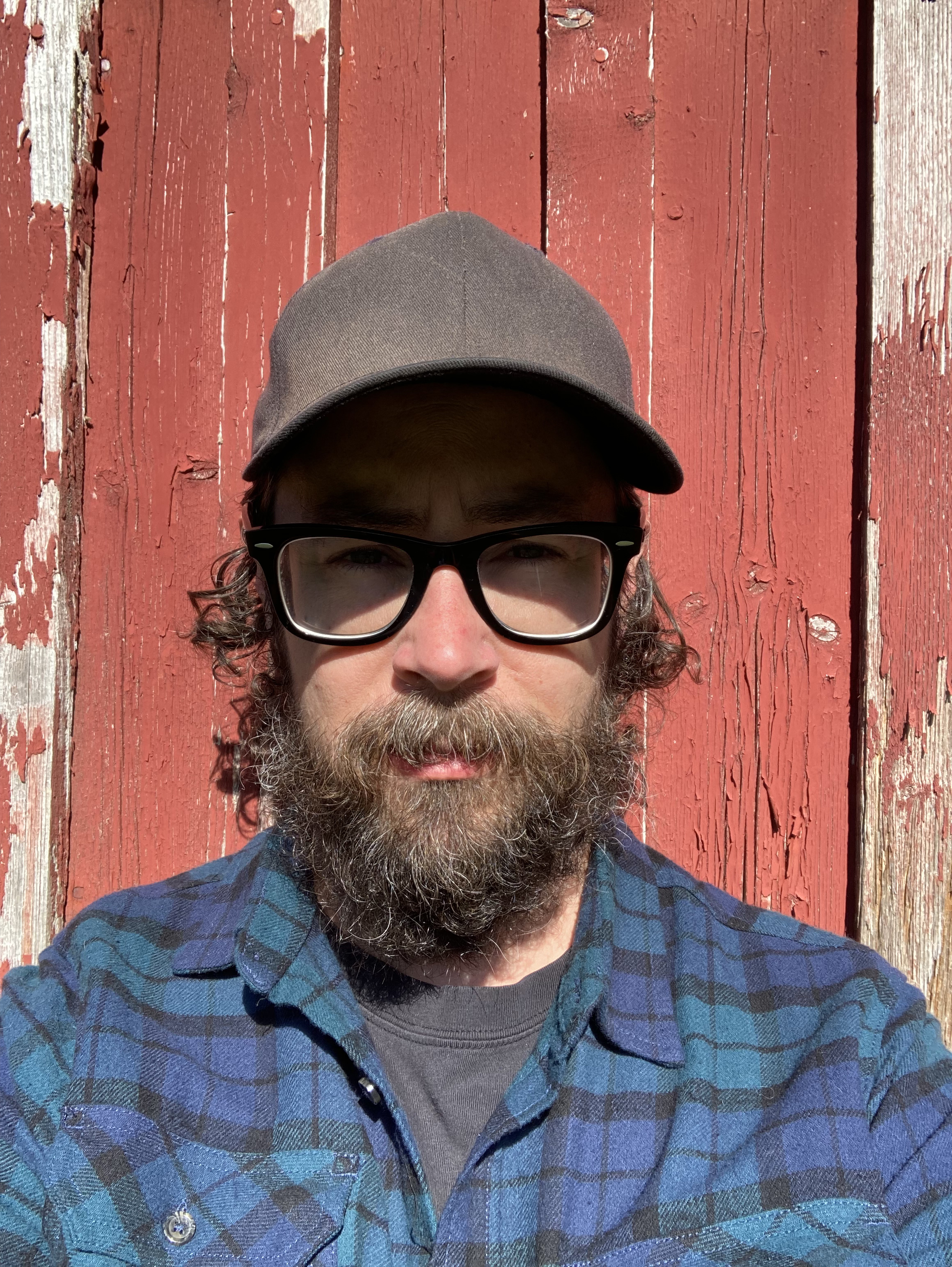
– Hi, Dag! It’s hard to believe, but almost 10 years have passed since your album ‘Elephant’ was released on Dronarivm in 2016. Then, six years later, in 2022, we released ‘Lexika’. These two albums are completely different in style, mood, and sound – almost as if they were created by two different artists. How has your musical style evolved over the years?
– Generally, I’d say that I’m still making the same music as I’ve always done – sentimental, slightly skewed with a big emphasis on emotions that resonates with me and often with some kind of cinematic feel to it. The thing is, I’m very restless as a person. So, if I’ve done something that’s sort of synthetic and heavy and dark, the next natural step for me is to create something that’s brighter, more acoustic and lighter to the touch. I grow tired of myself and constantly need to rebel against what I’ve done before. That’s the reason my albums always differ quite a lot from each other. I’m of course aware that this has probably put some people off throughout the years, and that I’m probably perceived as inconsistent and a bit all over the place, but I can’t really do it any other way.
That said, I think I’ve grown a lot as both a songwriter and when it comes to arranging and producing music over the last ten years. I feel that I’m more in control over how the music unfolds from that initial idea, and that I make more conscious decisions on what direction to take the music. I think this comes a lot from the work I’ve done with film and stage productions. Working with music for film or stage you have to find the essential core, feel and function of the music and make that your starting point. You have to develop themes and motifs and variations on these, and then you have to dress it just right sonically to emphasize or contrast or comment or whatever the music’s role is supposed to be in any given scene or moment.
I’ve also evolved as both a musician and when it comes to technical aspects of recording. I try to always learn new things that I can use in my creative process, but it’s also important that these new findings don’t stand in the way of the actual song, because then it just becomes empty sounds without any purpose or deeper meaning. That said, technical skill, whether it’s how well you can play any given instrument or your knowledge about music software or whatever it may be, is largely totally unimportant and totally uninteresting to me. The most important thing is always – and has always been – to actually mean something with the music you make.

– Where did the idea for ‘Tvåhundra ord för ensamhet’ come from? How did it take shape sonically? How long did you work on this album?
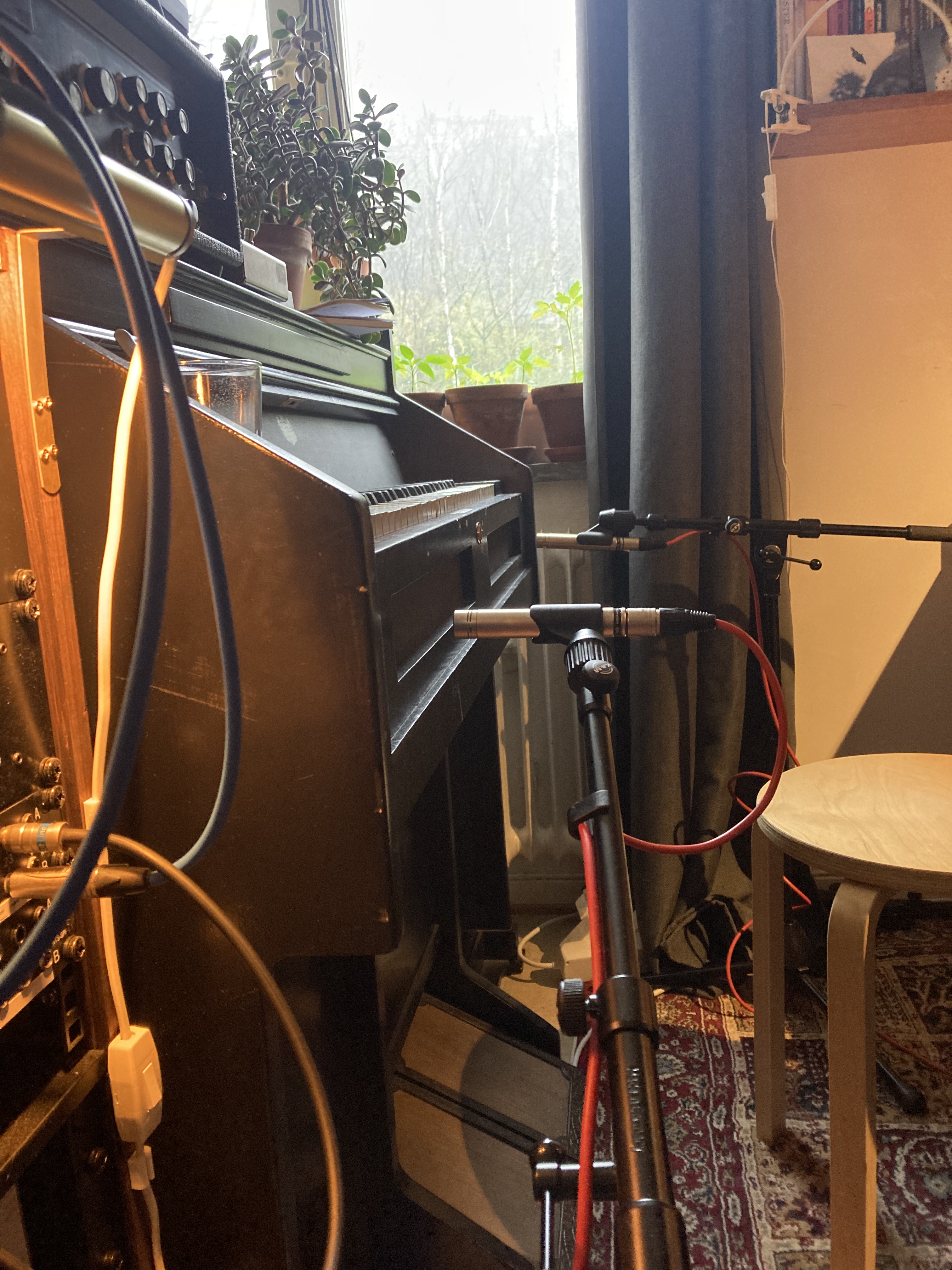
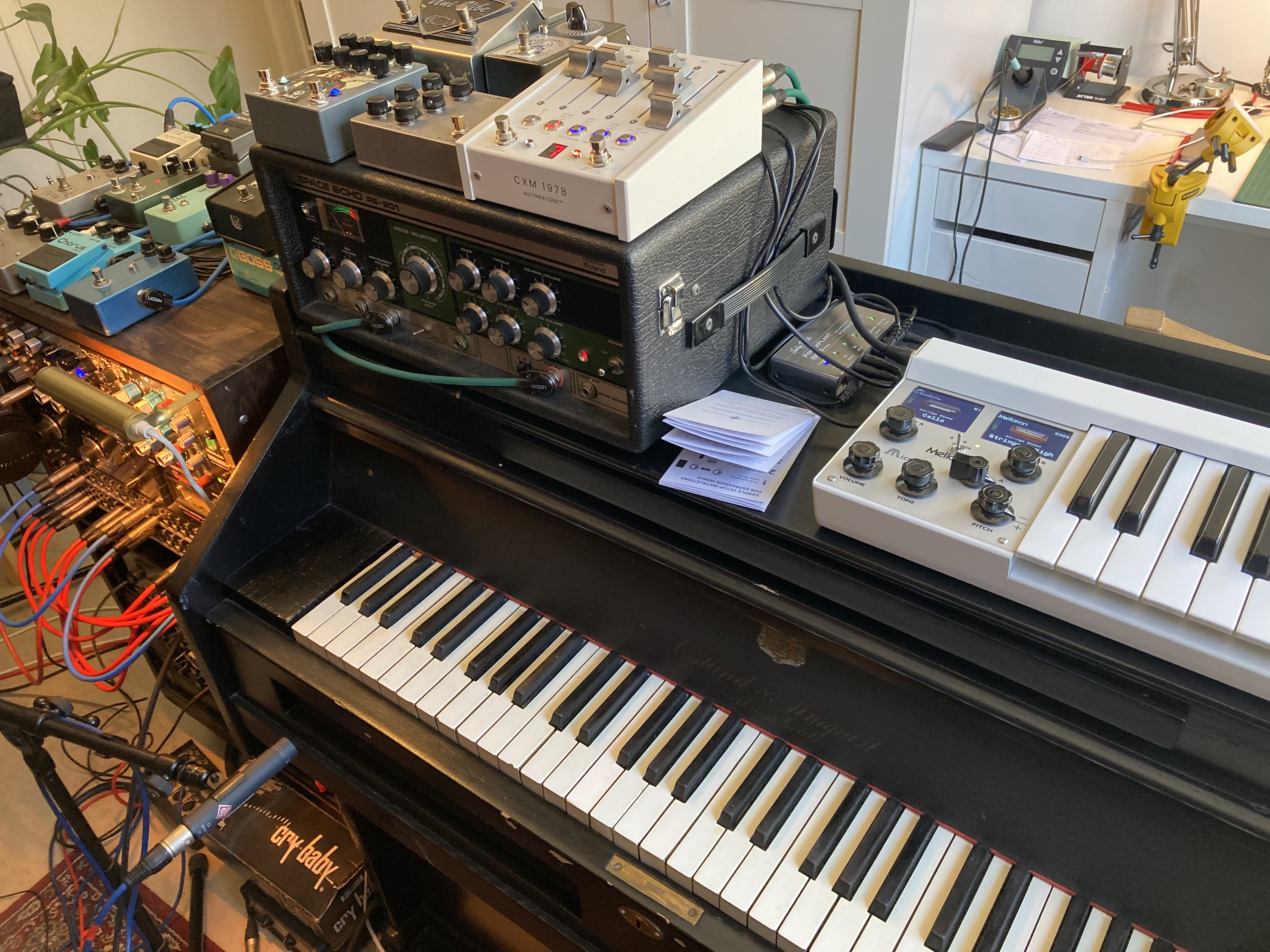
In September 2022 I bought a piano. I had had access to pianos previously but had quite limited knowledge on how to actually record it in a good way. Especially since I had also acquired a dampener for it and was mainly interested in capturing that piano tone, which lacks a lot of the overtones that it normally has. So the idea was to write and record something quickly, using mainly piano and mainly first takes. To go with my gut feeling and leave the mistakes in there. And to use this approach to try out different micing techniques and to just learn and experiment along the way. What I’d do is I’d sit down by the piano and come up with a simple chord structure and perhaps a melody or an arpeggio. I’d then record that on my phone and save for later. Once I had 3-4 ideas, I’d put some mics up, listen to the demos a few times to find the BPM’s and then basically just record it. Most of the basic piano recordings on the album are first takes. I then went on to record overdubs, but also here I wanted to keep it simple and sparse and spontaneous. For instance, the track Allt vi måste hinna med contains only the basic piano recording and a single pump organ recording. Nothing more.
But I did want to explore the sonic possibilities of the piano. So I also spent time trying to figure out ways of working with the existing recordings, either by cutting them up and re-assembling them in various ways – the track Om natten drömmer vi om våren is one example of this approach – or taking snippets here and there and building new textures and ideas out of this – the track Sjörök is one example of this. So a lot of the sounds on the album is actually just piano that I’ve pitch shifted, time stretched, cut, chopped and basically just tried to turn inside out.
The whole album was written and recorded during October and November and then edited and mixed over the Christmas holidays that same year. This is definitely the shortest process I’ve ever had with an album, as normally I spend somewhere between 2-5 years working off and on on an album. I’ve never been one for dogmatic approaches towards making music. But this time I wanted to stick to the limitations, and just do something quickly. Not obsess over every single little detail that no one will ever notice anyway, and not constantly second guess myself on every artistic decision. But rather just let go and let it be.
Generally, most of my albums start with an image or a short scene that I then proceed to try to put music to. Like a soundtrack to an event that has only ever existed in my mind. This album’s theme didn’t really present itself until I was actually starting with the final mixes. This was around Christmas time 2022, and always around Christmas, I think about all those who are alone over the holidays, and to whom Christmas just means an even deeper state of loneliness. So the album basically revolves around loneliness as a fundamental part of the human condition. That said, I don’t think this is a particularly dark album. To me it’s kind of hopeful and warm in a way. Because even though we are fundamentally lonely, we also do have each other, and we mustn’t forget that. Especially in times like these when the world seems ominous and bleak. There is compassion and care and respect and love out there. There are still people who wants to do good., I’m sure of it.
– The main instrument on ‘Tvåhundra…’ is the piano – but not just any piano. It’s a very specific instrument from your studio, and it seems to bring a deep intimacy to the album. We can even hear your breathing and the sound of the keys in the recording. Can you tell us a bit about this piano and its history?
– Like I wrote earlier, before getting this piano, I’ve never owned a piano before. But I’ve been wanting to have one for quite a few years. So late spring 2022 I started looking more actively for something to buy. The thing is, in Sweden you can get a decent piano for free because no one wants them anymore. There are a ton of pianos that has been sitting in people’s homes unused, more like as a piece of decorative furniture, and some people will even pay for you to come pick them up since it can be quite expensive to have them moved. My problem was what to look for in a decent piano, because I wanted an instrument that I could have for the rest of my life. So, I figured I’d actually spend some money on a piano that was fixed-up and that would only require some tuning once placed in my studio. I found this guy selling a pianino, which is a smaller model of a piano with a tone that slightly resembles a harpsichord. Seeing as my home studio was already cramped, the idea of a smaller piano appealed greatly to me. But once I tried the pianino – which he actually packed in his Volvo and drove home to me so I could try it on the sidewalk outside of my apartment – I felt the tone was too “brittle” for my tastes, so I passed on it. But we had a good talk, and he told me he’d keep his eyes open if something along what I wanted turned up. And so, I thought that was that.

But then a few months later, he texted me saying he’d found the perfect piano for me; a pianette that was standing unused at a coffee roaster in the north-eastern suburbs of Gothenburg. They had apparently brought in some pianos from a nearby secondhand shop to use for a concert series, and this pianette had been left sitting there unused for quite some time. And even though it was horribly out of tune, I immediately felt that the tone and feel of it was perfect. This was my piano, there was no doubt in my mind. And so I bought it for a symbolic sum, arranged transport a few weeks later and then had the same guy come and fix it up and tune it. He then told me that, seeing that it had been standing untuned for quite some time, I might have to do an additional tuning in a few months. But it kept its tuning for well over a year and a half, and when he finally came to fix it, it was only slightly off. So yeah, I’m very happy with my piano.
– The visual design of an album is always an important detail. The cover of your new album features handmade home embroidery, reminiscent of everyday interior details. Why did you choose this design, and who created the artwork?
– The album cover is very important to me whenever I release an album. I always put a lot of effort getting the cover design just right, because to me it’s both an extension of the music and an integral part of the whole artistic statement that an album is. For this release, I wanted the cover to reflect the personal and “home grown” feel of the music. So, I asked my girlfriend’s mother Gun-Britt Skagerlund – who’s both amazing when it comes to basically everything in handicraft and a lovely old lady – if she could embroider the title of the album for me. My idea was to only have the title, but without me knowing it, she added the flower ornaments and to me that made all the difference as this really gave it the feel of something that could have been done like 100 years ago and that you’d find lying around at a thrift store or laying on a table in your grandparent’s house. My initial idea was to put the embroidery on my piano and photograph that, but that didn’t really work out the way I wanted, so I scanned it instead and we used this for the cover design. This gave the album a much brighter feel overall, where the texture of the fabric became the basis for the whole design, and I’m really happy with how it turned out. It also means a lot to me that the embroidery was made by someone I care so much about, making the whole album even more personal to me. Eventually I will get the embroidery framed and I will hang it on the wall of my home studio.
– If you had to say something to capture a listener’s attention and draw them into your new album, what would it be?
– I am of course very aware of the fact that there are millions of “moody piano” albums out there, so I’m not really breaking any new ground here. And a lot of them are probably made by people who are a lot more skilled at playing than what I am. But the point here is that Tvåhundra ord för ensamhet isn’t about skill or perfection or the flawless equilibrist delivery, it’s about creating something honest and personal. This is a collection of songs that are true to themselves. They don’t hide behind anything. The mechanical sounds are left in there, so are any unintentional or “unwanted” sounds, because that’s what this record is – flawed, personal, fragile and beautiful, and I really hope that you take the time to sit down and have a listen, because I think it’s worth it. Also, bonus points if you can guess what the inspiration for the track Inlandsmänniskan is.
– Is there a question we haven’t asked that you wish we had? If so, feel free to ask and answer it yourself.
– What other piano-driven records would you recommend checking out? Well, thanks for asking! Then I’d recommend the following great recordings.
90 Day Men – Panda Park
Not 100% piano-driven per se, but whenever I get the chance to, I try to get people to listen to this overlooked amazing band. And the piano and other keys play an integral role in the sound. Sadly, this became their swan song, but what an amazing and strange and beautiful album this is.
Simeon Ten Holt – Complete Multiple Piano Works
Definitely a challenging collection of music but so rewarding if you just give in to it. Music that bends and then stops time.
Bobo Stenson Trio – Indicum
In my opinion, one of the finest jazz records ever. Sparse but yet so full of sentiment and layers. Even if you don’t like jazz, you have to appreciate the beauty of this album. I can’t recommend this enough.
Tim Hecker – Dropped Pianos
I actually prefer this over Ravedeath, 1972. This feels more intimate, fragile and personal in a way. Probably my favorite Tim Hecker album.
Discover more from DRONARIVM
Subscribe to get the latest posts sent to your email.
 DRONARIVM