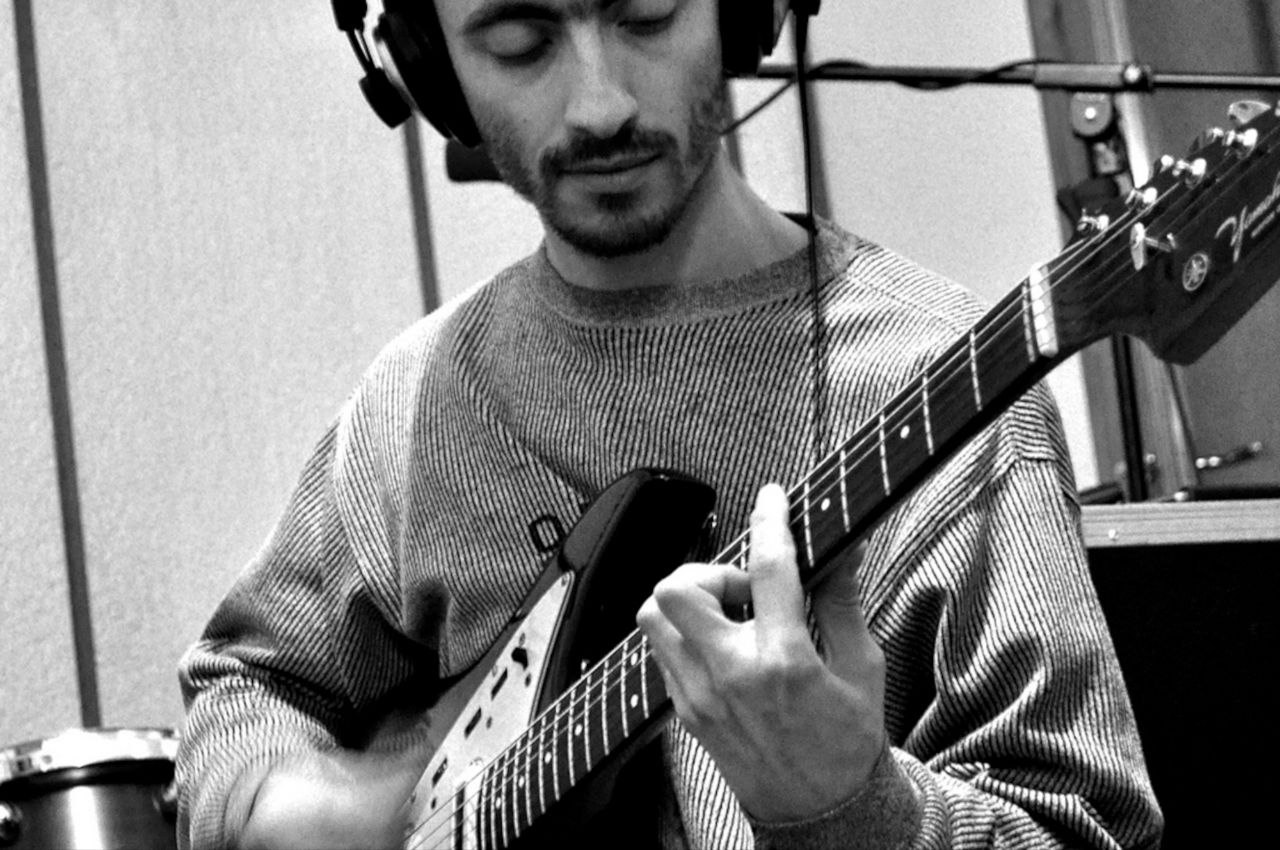
– Hi, Alessandro! You don’t have many albums in your portfolio yet. So the listener, and us, would be curious to know who Alessandro Barbanera is? Tell us a little about yourself. When did you start making music and what do you do besides it? Who or what determined the choice of the genre you work in?
– Thanks for this question. I started studying classical guitar as a kid, and so I obtained an academic education. During my years of study, I listened to a lot of classical music — Bach, Mozart, Beethoven, Schubert, Tchaikovsky, etc.— and this had a great impact on my taste and my way of listening.
But on the other side, I obviously also listened to rock music that a young person could listen to in the second half of the 90s: Oasis, Radiohead, for example, then also The Cure, The Smiths, Joy Division… Meanwhile, I played in an indie rock band called “Mentivo“, and we recorded a studio album. Delving deeper and deeper, I started from The Beatles, up to Genesis, Pink Floyd, and King Crimson. It was a progressive discovery of the stages of the history of music.
On one side, following the line of academic studies, it led me to be interested in experimental electroacoustic music—from Berio to Stockhausen to John Cage. On the other side, it was perhaps through Robert Fripp or David Bowie that I arrived at Brian Eno and ambient music. I remember, at that time, the release of a collection of CDs attached to the newspaper “La Repubblica” dedicated to ambient. I wore out those records.
I think it was then that I realized that this kind of music was congenial to my way of expressing myself, to my sensitivity. A music that flowed organically, capable of reaching the most hidden spaces of the soul, expressing a vast range of emotions and sensations, developing as an emotional flow through subtle changes. A music that can deeply touch the listener.
So I went from composing sonatas for classical guitar or orchestral sketches to composing more fluid, slow, organic pieces, using manipulated sounds, synths, electric guitars, loops, noise boxes, and field recordings, inspired by artists such as Stars Of The Lid, Tim Hecker, Fennesz, and also by the post-rock of artists such as Godspeed You! Black Emperor or Sigur Rós…
Now my days are always filled with music. Not only for playing, listening, and composing but also for my activity as a classical guitar builder and teacher.
– Do I understand correctly that in the past you released several digital albums, including one on the Laverna label, and one physical album on ROHS! Lontano Series? Tell us a little about them.
– Yes. I have to say that I like to consider “In The Middle Of The Path” as my first LP, which is a self-produced album from 2019. For it, I made some physical copies by hand, in a very DIY way! I am very attached to this album; it is a bit of a synthesis of ideas that I had on the workbench for several years.
Before it, I had released an EP (“Bastard Under The Stars”) for ARIAM Records in 2015 and various singles also for this label (including a 33-minute flow track entitled “Away From This World“). “Haunted Houses” is from 2020, for Laverna. An album born during the pandemic period, and I think it is very much influenced by the isolationist atmosphere. I thought of our houses “haunted” by an invisible virus, and I thought of our souls where ghosts live hidden deep inside. In some ways, it speaks of all this.
In that period, I could hardly leave the house. I collected a lot of field recordings of creaking doors, creaking windows, sounds of people moving in rooms, sounds late at night from the distant and deserted street… While “Oblio“, from 2022, released by ROHS! Lontano Series, could be an ideal sequel to “Haunted Houses” (it is actually composed of pieces born during the 2020 sessions). “Oblio” reflects even more on the fading and changing of memory. Each song is based on piano loops of classical pieces (Debussy, Ravel, Bartók) dismantled and deconstructed, a bit like in the works of William Basinski.
The last track is a non-existent song, indicated only in the tracklist, but which in fact can only exist in the listener’s imagination. Just as “In Darkness Let Me Dwell” has a story that everyone can imagine and reconstruct as they want. I like to stimulate the listener. I like the listening experience not to be exclusively something passive.
Anyway, to conclude, I like to think of “In The Middle Of The Path,” “Haunted Houses,” and “Oblio” as a kind of “existentialist trilogy.”
– How did the idea of the album “In Darkness Let Me Dwell,” inspired by the aesthetics of film noir, come about? Why did thus theme inspired you so much?
– “In Darkness Let Me Dwell” is an album that came unexpectedly. It wasn’t expected at all, also because I was moving in other directions. It was like following someone else’s tracks, a real search for clues.
I was improvising with a sample of strings randomly recorded from the radio, with field recordings of rain, and the sound of a glass bottle rolling… Slowing everything down more and more. The more I listened to that mix of sounds, the more they strongly suggested to me an atmosphere of an old black-and-white film—mysterious, smoky, dark, and full of rain.
It suggested something very distant in time that perhaps I had seen on TV as a child, or lived, or dreamed. The vague image of someone’s shadow cautiously climbing the stairs. Maybe a scene from “Blue Velvet”. The music reminded me a lot of the opening credits of the film. Maybe as a child, I had seen it on an old black-and-white TV… there are those kinds of curtains that wave while the credits scroll. This is the track that originated the entire album, and now it is called “Traces To Nowhere” (which is also the title of an episode of “Twin Peaks”).
I couldn’t miss the opportunity to follow those tracks, to search for that atmosphere. A bit like a psychoanalysis session, like the famous “madeleine” by Proust. So after “Oblio” (Oblivion), there could only be… “In Darkness Let Me Dwell“!

– How did the process of working on the album take place? How long did it take to collect the material, and what equipment did you use?
– The album developed almost by itself… I remember that it was raining a lot at that time, and I tried to record as many sounds of the rain and storms as possible.
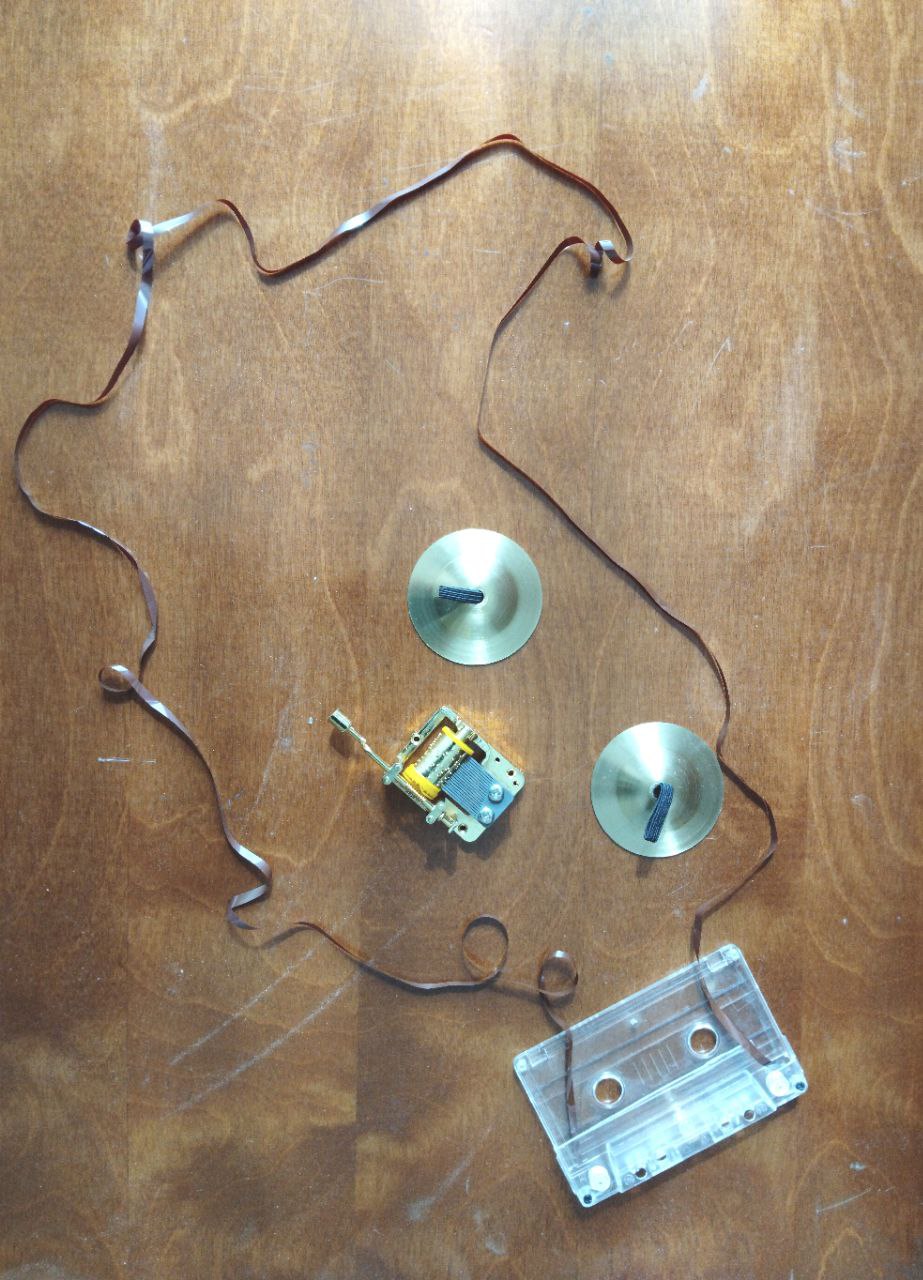
I collected many sounds for this album: ticking clocks, matches being lit, creaking windows under the wind, music boxes, sounds of night streets… even tools that I use in my workshop, Japanese saws, clamps, hammers…
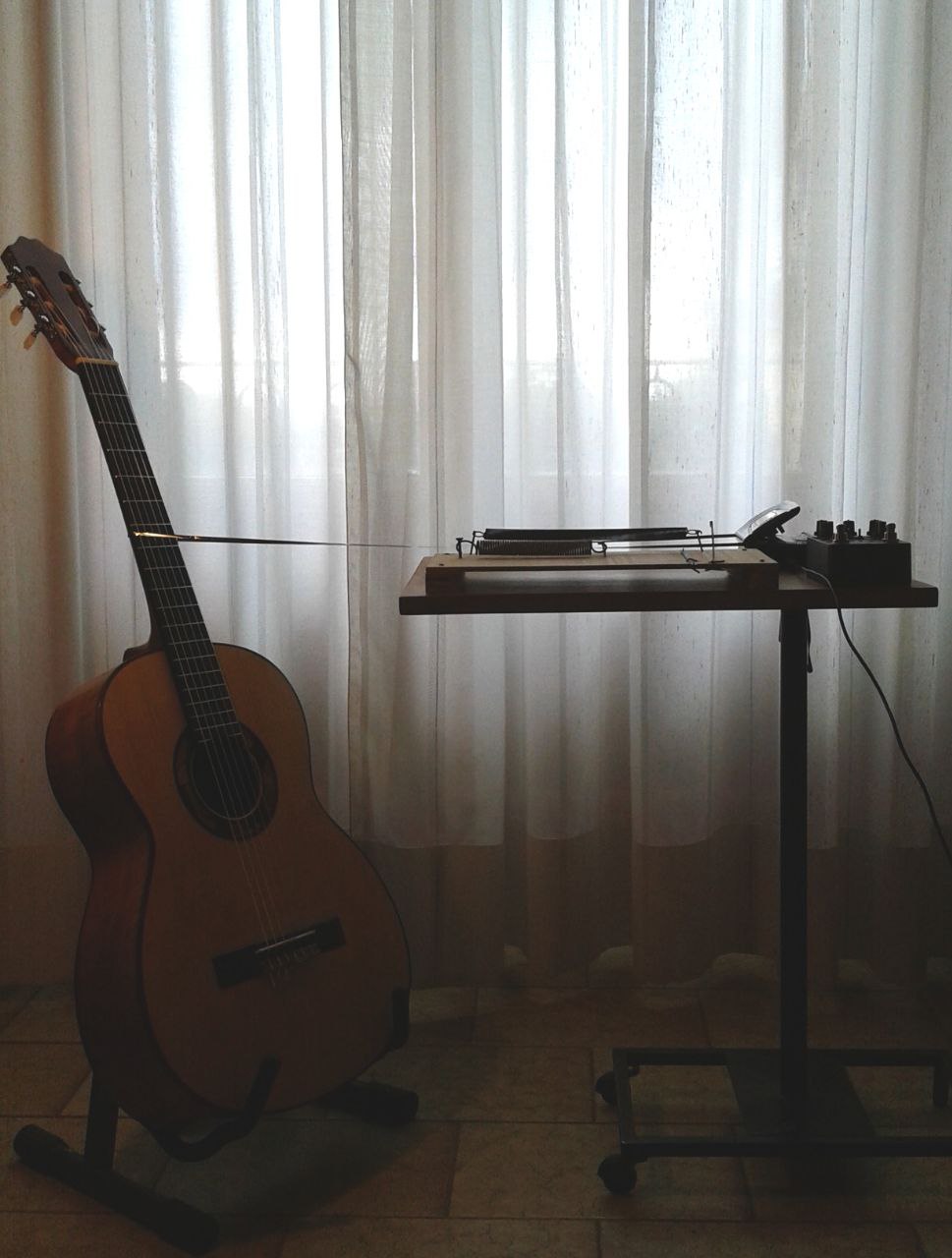
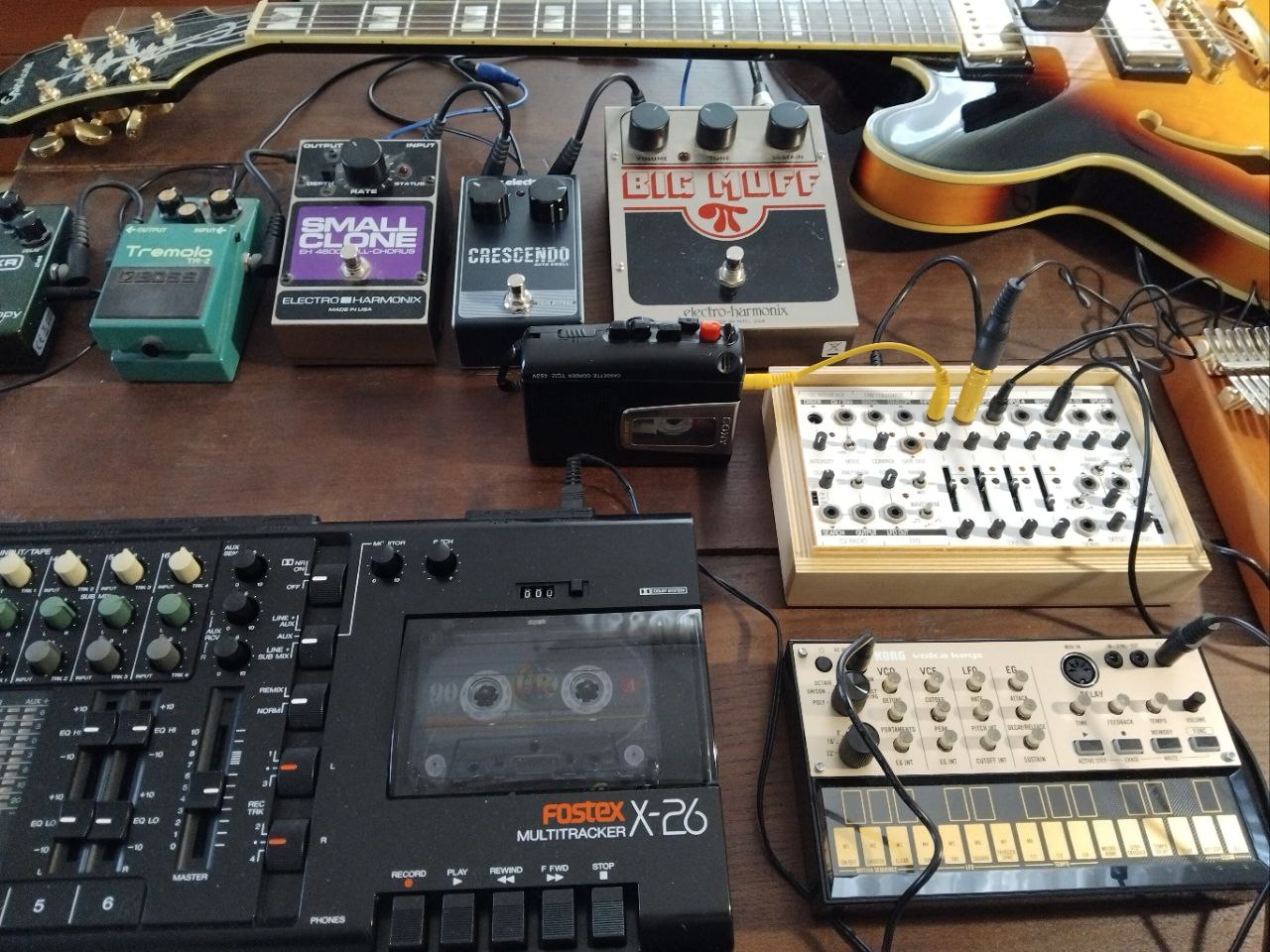
For the voices, I used very short cells of pieces by John Dowland himself, deconstructed and reconstructed, assembled in chorales that seem ancient but are illusions because they are completely new creations. Then I used duffer synths and guitars, also recorded on tape and reworked on computer.
The work of editing, of assembling, is then the decisive process: it is a real work of composition, of elaboration of the pieces, and arrangement as if it were a collage. I also like to work on the structure, create intense dynamics, and chisel every little detail, like a craftsman.

– Francis M. Gri (ex-All My Faith Lost) was in charge of mastering this album. Why did you choose him, and do you maintain any contacts with other Italian artists?
– I met Francis for Haunted Houses. I sent him some stuff to listen to, and he offered to work on the mastering. I like his work, so I thought I’d entrust him with the new album too. He also uses analog gear, and that’s what I was looking for for In Darkness Let Me Dwell: a warm, vivid sound.
I have had the opportunity to collaborate with other Italian artists. Last year, for example, an album was released on Industrial Ölocaust Recordings under the name Zakhme, an ambient/experimental duo formed by me and Gianluca Ceccarini.
Some time ago, I was involved in the compilation Selected Ambient Works From Italy on Luca Tommasini’s Tiny Drones For Lovers label, which brought together various artists from the Italian scene. Then this year, the album Collettivoinconscio vol.2 was released on Materiali Sonori, a project by sound artist Luca Giuoco. It involved a good number of artists, inviting each one to donate a sound of just a few seconds and of any genre, which Luca then assembled, sewed, and reworked, creating an entire album in a coherent and amazing way.
I am truly happy to have been able to contribute with a tiny piece—a drop that will remain forever unknown, like so many others, in the midst of that great flow.
– What would you say to your potential listener to get them interested in evaluating your new work?
– I think it’s an honest, sincere work, where each piece has its own character. I tried to create to the best of my ability, trying not to follow the most obvious paths. It’s a “reasoned” album, where the construction and structure are thought out and cared for in detail.
But it’s also an album of heart, blood, nerves, and emotions. To compose, I always start from an emotional aspect, a sensation, or an atmosphere. I hope the listener can appreciate this and be involved in this particular atmosphere—that they can “feel” it.

Discover more from DRONARIVM
Subscribe to get the latest posts sent to your email.
 DRONARIVM